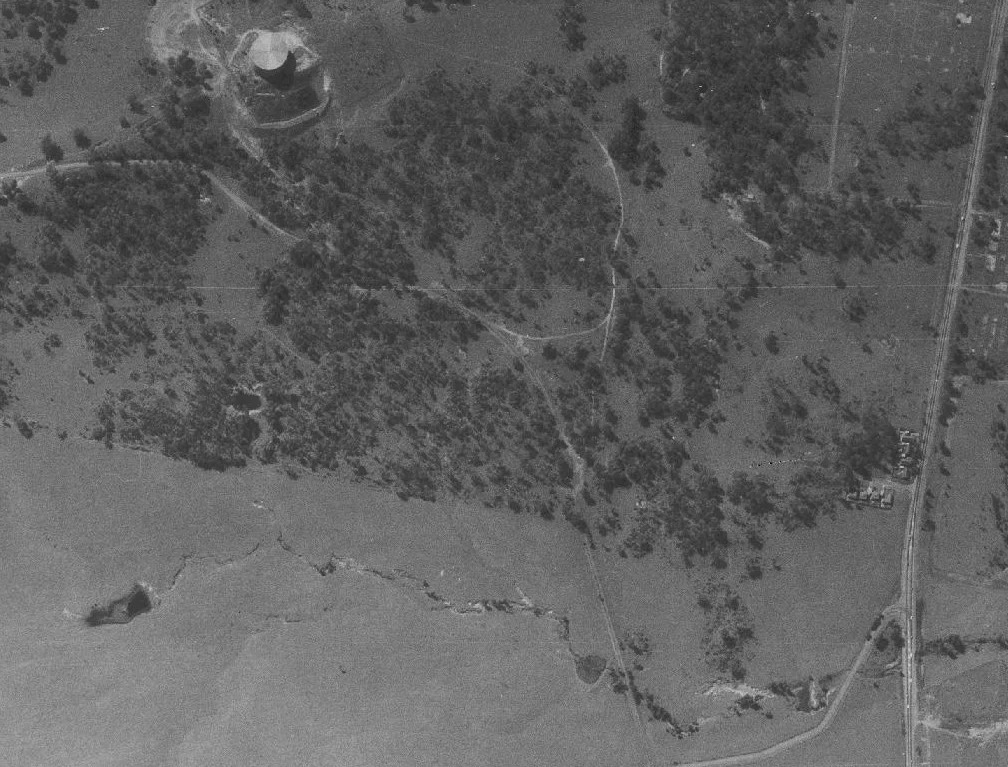
The land at Eastern Creek that became Australia’s Wonderland had been part of the Minchinbury Estate, grazing country, part of the Wallgrove Army Camp in the Second World War and a migrant hostel after it. The photos on this page show the land before construction began in June 1984.
Darug Country
The site is part of the traditional Country of the Darug people, who occupied the Western Cumberland Plain long before European settlement. The Eastern Creek district is associated with the Wawarawarry people, one of the traditional groups of the wider Blacktown area. Blacktown City Council’s 2005 Lot 11 Precinct Plan for the former park identified areas of Aboriginal archaeological sensitivity on the site and set requirements for their protection.
1819: the Minchinbury Estate
In 1819 Captain William Minchin received a grant of about 1,000 acres (405 hectares) in the area that became known as Minchinbury. The grant included land that later formed part of the Wonderland site. The Minchin family used the property for grazing. By the time the estate was sold in 1859, about 200 acres (81 hectares) had been cleared and divided into paddocks.
1859: Dr Charles McKay
Dr Charles McKay bought the estate in 1859 and by the early 1870s had added about another 1,000 acres. In the 1860s he planted vineyards on the western part of the estate, the start of the Minchinbury wine-making operation. The land that became Wonderland stayed pastoral and was leased to tenants for grazing; the park was not built over the winery itself. An attempt to subdivide and sell parts of the estate in 1881 failed, and financial difficulties forced its sale in the 1890s.
1890s to 1975: the Angus family
The estate passed to James Angus, a businessman with interests in engineering, mining and agriculture. He kept the vineyards and the grazing leases, and the Minchinbury winery became known for its sparkling wines. In 1913 Angus sold the winery and vineyards to Penfolds but the family kept much of the surrounding pastoral land, used mainly for sheep. The Angus family’s connection with the remaining estate lasted until 1975.
1941: the Wallgrove Army Camp
In 1941 the Australian Government resumed about nine acres (3.6 hectares) of the Angus estate and another 120 acres (48.6 hectares) of adjoining land for the Wallgrove Army Camp. Parts of the camp stood on land that later became the Wonderland precinct. Wallgrove was a training and staging area with accommodation, training facilities, internal roads and supporting infrastructure; units associated with the wider camp included Light Horse and infantry formations. At its height the wider camp held about 5,000 personnel.
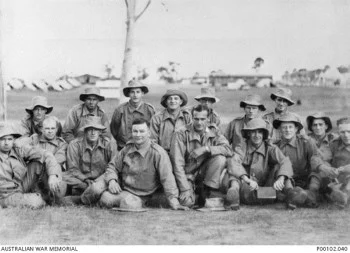
In 1942 more land was resumed to build the Ingleburn Strategic Road, now Wallgrove Road, for military transport. Australia’s Wonderland was later built beside it.
1950: the Wallgrove Migrant Hostel
After the war parts of the camp became migrant accommodation. The Wallgrove Migrant Hostel opened in April 1950 and first ran until December 1952; the buildings were used for migrants again in the early 1960s, including British arrivals. At its peak the hostel held about 2,500 people and ran four dining halls, with families living in converted army huts. Blacktown City Council’s research records that some of the former military buildings in the future Wonderland precinct stood until the mid 1970s.
The land before construction
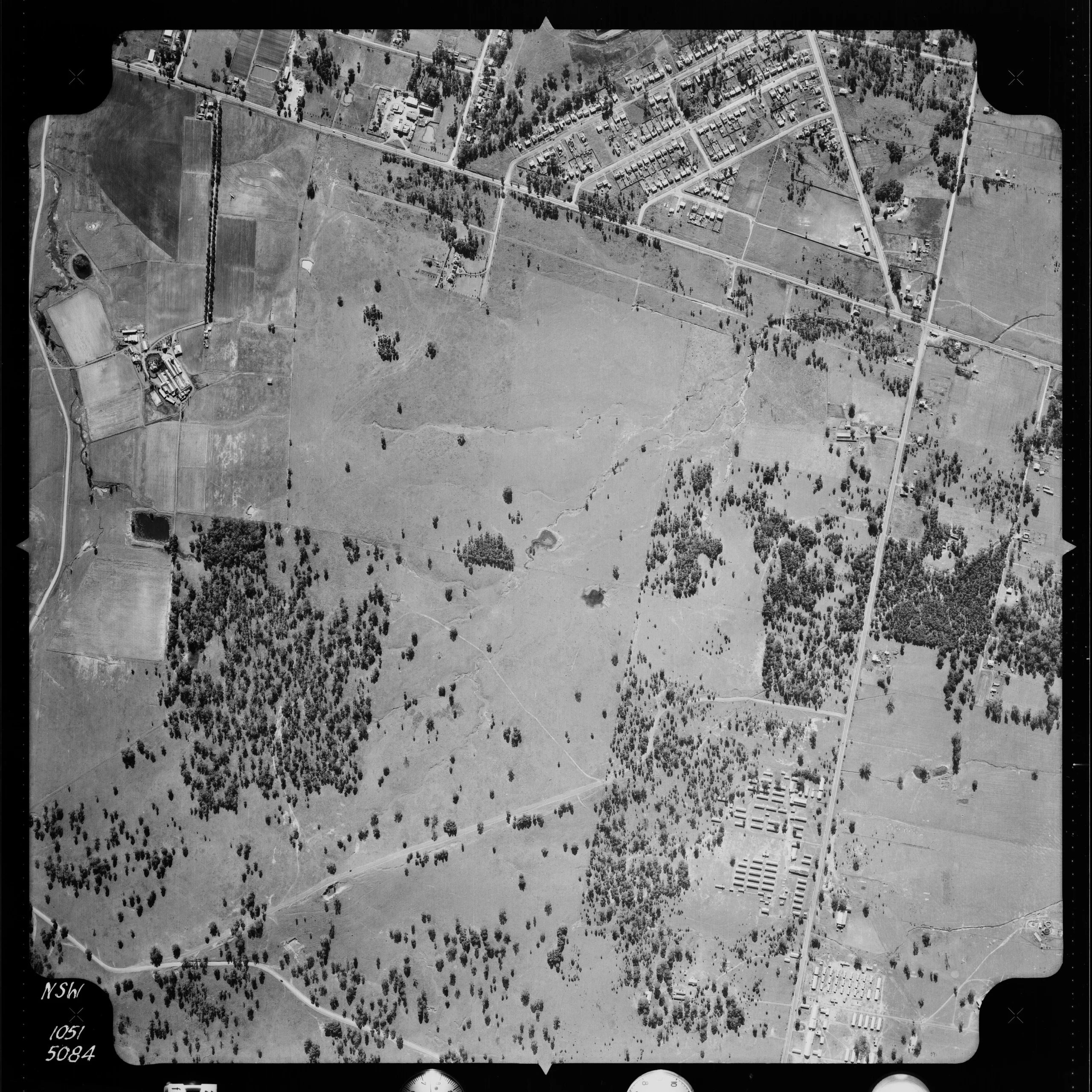
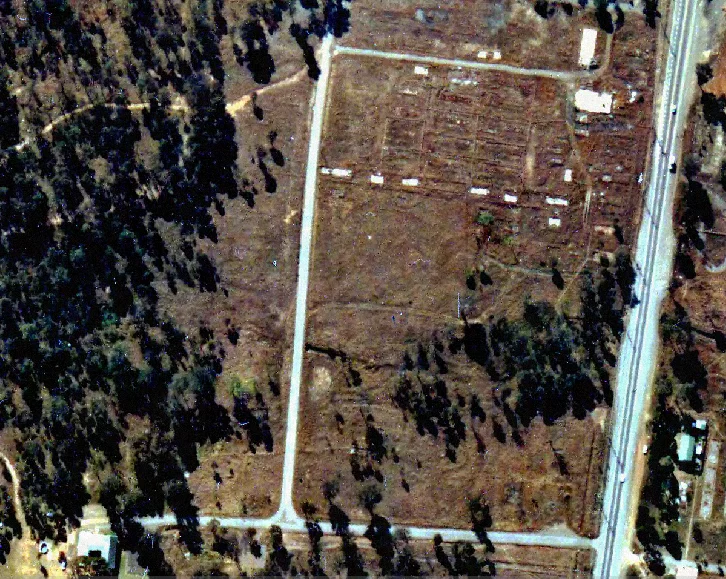
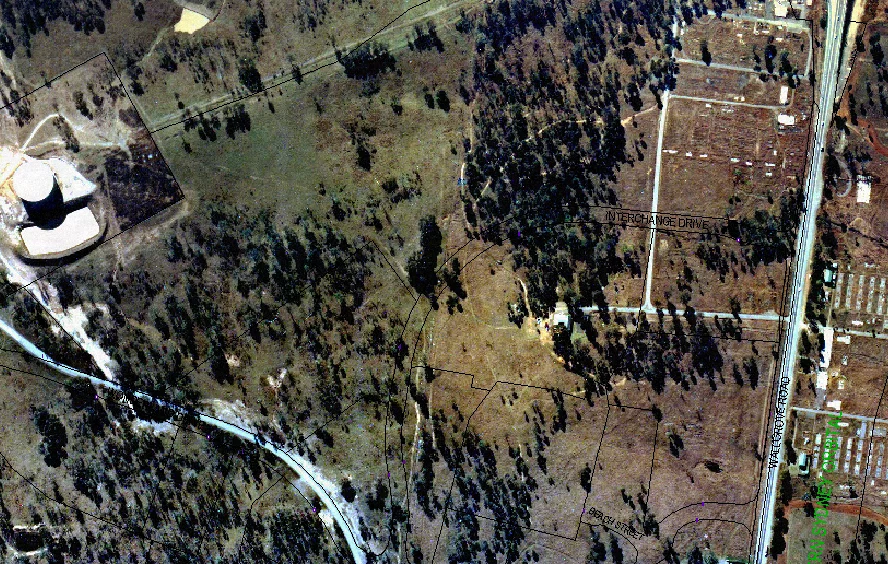
The aerial photos below show the land on 27 June 1961, in 1977 and on 19 September 1983, before construction began. By the late 1970s the remains of the camp and hostel had been removed and the land was open grassland with scattered trees and old tracks. The purpose of every feature visible in the 1977 photos has not been established.
4 photos on this page
1983 to 1984: zoning, consent and construction
On 4 November 1983 the land was zoned 3(k) Entertainment and Tourism under Blacktown Local Environmental Plan No. 65. On 1 March 1984 Development Consent No. 013166 was issued for the themed entertainment park. Construction began in June 1984 and the park opened on 7 December 1985. In 1988 the zoning became 3(c) Entertainment and Tourism under changes to Blacktown’s planning scheme, and on 2 July 2004, after the park closed, the land was rezoned for employment-related development under Amendment No. 6 to State Environmental Planning Policy No. 59. The building of the park is on the Construction Timeline; the whole story from 1977 to today is on the Wonderland Timeline.
Got a Wonderland story or photos to share?
Join us on Facebook - share memories, photos and stories of Australia's Wonderland with thousands of other fans.
Join Wonderland History on Facebook →