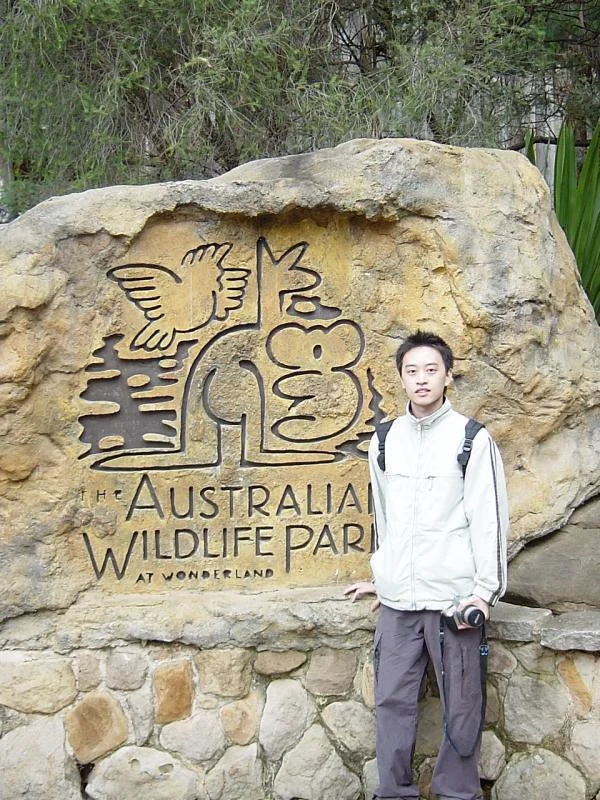
The Australian Wildlife Park opened at Australia’s Wonderland in 1990, on land previously occupied by Magilla Gorilla’s Flotillas paddle boats. It was an attached area showcasing native Australian wildlife (koalas, kangaroos, wombats, dingoes, crocodiles, snakes and birds) with daily presentations including the Bird Show, Reptile Encounters and Sheep-Shearing demonstrations. The Outback Woolshed restaurant, added in 1995, sat alongside.
The Australian Wildlife Park first opened its doors on 26 December 1990 and was part of Wonderland Sydney (formerly Australia’s Wonderland). It brought many local tourists to the park, plus a large ring of international tourists. When The Australian Wildlife Park first opened, it was opened 7 days a week. Wonderland shortly followed suit 12 months later. It closed its doors when Wonderland closed on 26 April 2004. The animals were forced to move onto other parks or sold as pets.
Each year over 1 million people visited Wonderland Sydney with The Australian Wildlife Park, you could go and visit native Australian animals in natural, interactive surroundings. The Australian Wildlife Park was home to over 600 animals including Dingoes, Kangaroos, Koalas, Wallabies, Goannas, Little Penguins, Crocodiles and Wombats.
At its opening in December 1990 the Wildlife Park was “set on over 10 acres”, with underwater crocodile viewing, in-burrow wombats and eye to eye goannas. By 1994/95 it had rare white kangaroos, giant goannas, the 5 metre crocodile Maniac, koalas, fairy penguins and a hands-on farm, with a separate Wildlife Park only entry fee. By 1997 it had 35 points of interest, among them the echidna, wombat and koala exhibits, the animal nursery, the waterfowl lake, the nocturnal house, the koala research, breeding and quarantine centre, the wetland habitat, dingoes, the albino kangaroo, Tasmanian devils, the walk-through rainforest aviary, the kangaroo feeding area, venomous snakes, flying foxes, fairy penguins, the giant saltwater crocodile Maniac, the python house, the koala walk, The Outback Woolshed and an amphitheatre for educational talks. It opened at 9am, an hour before the main park. By 2002 it held over 600 animals, with the interactive Kangaroo Walkthrough, the elevated Koala Valley boardwalk, daily koala, crocodile and snake presentations, nocturnal sugar gliders, possums and owls, a daily Blinky Bill and Skippy show, and The Outback Woolshed Show.
The Australian Wildlife Park offered guests the chance to have an ‘outback experience’ without leaving Sydney.
All guests where sure to be entertained by the lively blokes from the bush in The Woolshed Show. The show included sheep mustering, sheep shearing, whip cracking and an insight into ‘life on the land’ in Australia. An ‘out the back’ experience including boomerang throwing, whip cracking, billy tea and damper could be arranged for groups with prior notice. This is what the back stables were used for.
The Wildlife Park, 2001 to 2004
The enclosures were the Nocturnal House, the rainforest aviary and turtle pond, the Koala House, the Kangaroo Walkthrough with its albino kangaroo, the Wetland Habitat, the Animal Nursery, dingoes, Koala Valley, Tasmanian devils, lorikeets, venomous snakes, fairy penguins, the saltwater crocodile, wombats, wallabies, goannas and echidnas. Its theatres were the Reptile Amphitheatre, The Outback Woolshed and the Puppet Tree Theatre, and Redgum Refreshments sold the food. Koala Treetops was an elevated walkway through the gum trees, and the Koala Photographic Display Centre sold a photo with a koala, developed in minutes.
Show times in 2003: the Outback Woolshed Show at 10am, 11am and 2pm, Rapt in Reptiles at 10.30am and 2.30pm, penguin feeding at 11am and 3.30pm, Koala Lifestyles at 11.30am and 4pm, the reptile tour at 1.30pm and Blinky Bill at 11am. The 2002 site counted over 600 animals on about 15 acres, said the Tasmanian devils had bred for six years running, 13 devils in all, that 26 koala joeys had been born in the park’s 11 years, and that 18,000 trees of 23 eucalypt varieties fed the koalas.
Jonathan Minor was Director of Life Sciences, four years in the job by February 2003, when exotic animal displays were promised for late 2003. Two lion cubs, Masai and Mara, went on show in Goldrush from 13 December 2003. An emergency wildlife care centre, Animals in Crisis, was announced on 10 January 2002 for the bushfire season. The park was still inviting visitors to the Wildlife Park on 19 May 2004, three weeks after the theme park closed, which does not fit the closing date given above; the point needs checking.
Got a Wonderland story or photos to share?
Join us on Facebook - share memories, photos and stories of Australia's Wonderland with thousands of other fans.
Join Wonderland History on Facebook →